About the mandir
On the bank of the Shipra at Bhairavgarh stands the temple of Kal Bhairav, revered as the guardian and Kotwal of Ujjain. The shrine is mentioned in the Avanti Khanda of the Skanda Purana and is known across India for its Tantric tradition of offering liquor to the deity. Pilgrims hold that a visit to Mahakal is complete only after darshan here.
- 6:30 AM The doors open
- 8:00 AM Morning aarti
- 8:30 PM Evening aarti
- 9:30 PM The doors close
History
The Kal Bhairav temple stands at Bhairavgarh on the bank of the Shipra, a few kilometres north of the old city of Ujjain. Tradition credits the original shrine to a king named Bhadrasen, and the Avanti Khanda of the Skanda Purana speaks of the sanctity of this place. Sculptures of Shiva, Parvati, Vishnu and Ganesha dating to the Paramara period (9th–13th century CE) have been recovered from the site, which shows that worship here is many centuries old. The building seen today was raised over the remains of that older temple and carries a clear Maratha stamp. It is associated with the Maratha general Mahadji Shinde, who is said to have offered his turban to the deity after the setback at Panipat in 1761 and later had the temple restored. Popular belief holds the shrine to be far older still, but that claim rests on faith rather than on dated evidence.
The Legend of Kal Bhairav
According to the Puranic tradition, Bhairava is the fierce form that sprang from the anger of Shiva. A widely told story says that when Brahma grew arrogant, Bhairava appeared and severed his fifth head. The act left him burdened with the sin of brahmahatya, and he wandered in search of release. The tradition told in Ujjain holds that he performed penance on the bank of the Shipra, was freed of the sin, and chose to remain here. Since then, devotees believe, he has watched over Avantika as its Kotwal, the keeper of the city, and as the Senapati, the commander, of Lord Mahakal. This is why pilgrims say that a visit to Mahakaleshwar is complete only after bowing before Kal Bhairav. These accounts belong to faith and sacred lore, and they are shared here as the tradition tells them.
Temple and Architecture
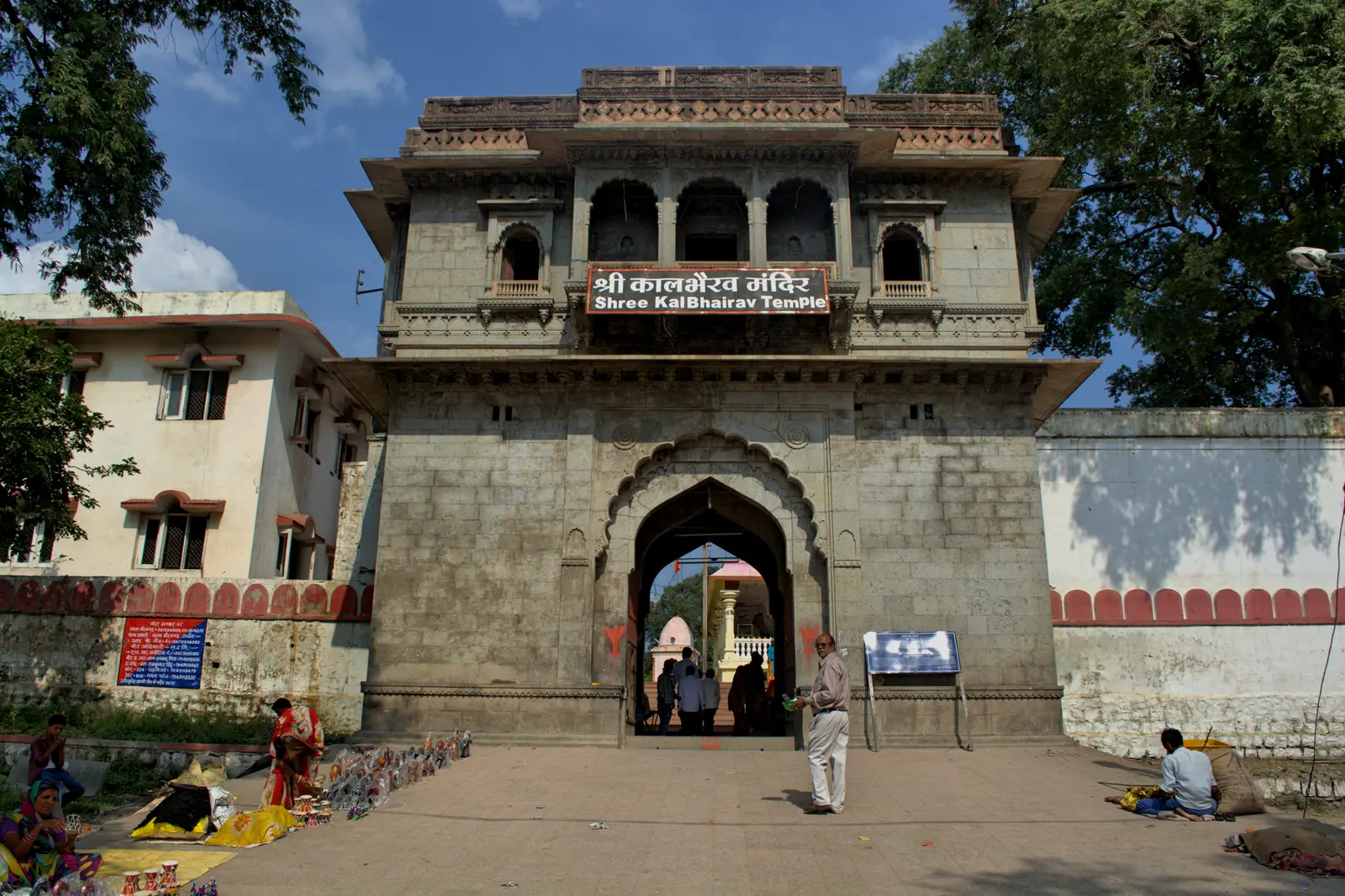
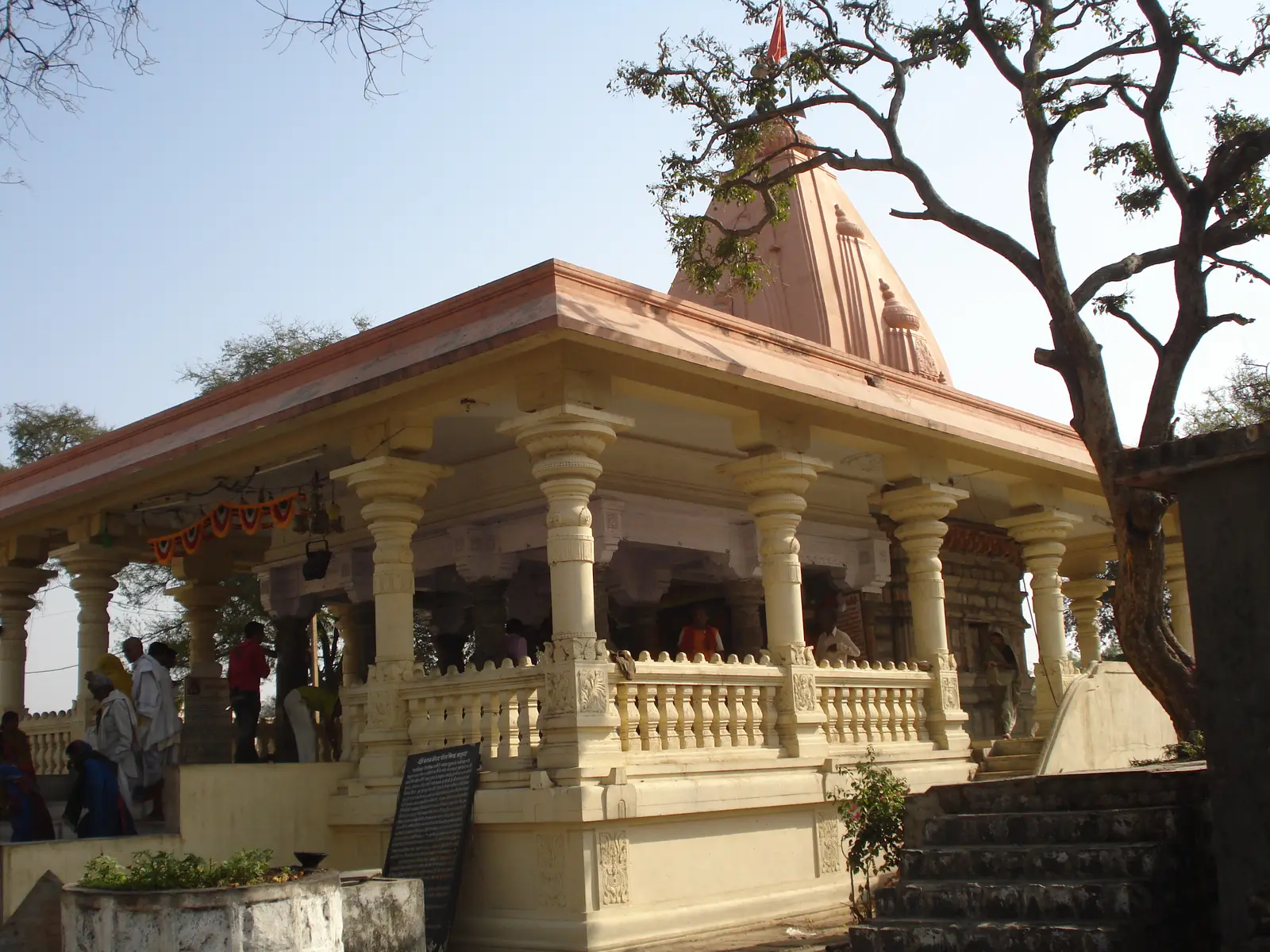
A tall stone gateway in the Maratha style, with an arched entrance and projecting balconies, leads into the walled temple compound. Inside, the shrine stands on a raised platform reached by a broad flight of steps, with a pillared hall open on its sides and a modest spire above the sanctum. The deity is not a full sculpted figure. The face of Kal Bhairav is a rock form thickly layered with vermilion, crowned with a silver head and a Maratha-style turban, a custom traced to the time of Mahadji Shinde. The walls were once covered with paintings in the Malwa style, of which only traces survive. In the courtyard rises a dark stone deepmalika, a tower of lamps. The compound is also described as holding a narrow underground cave shrine known as Patal Bhairavi and a small shrine of Dattatreya.
The Madira Bhog Tradition
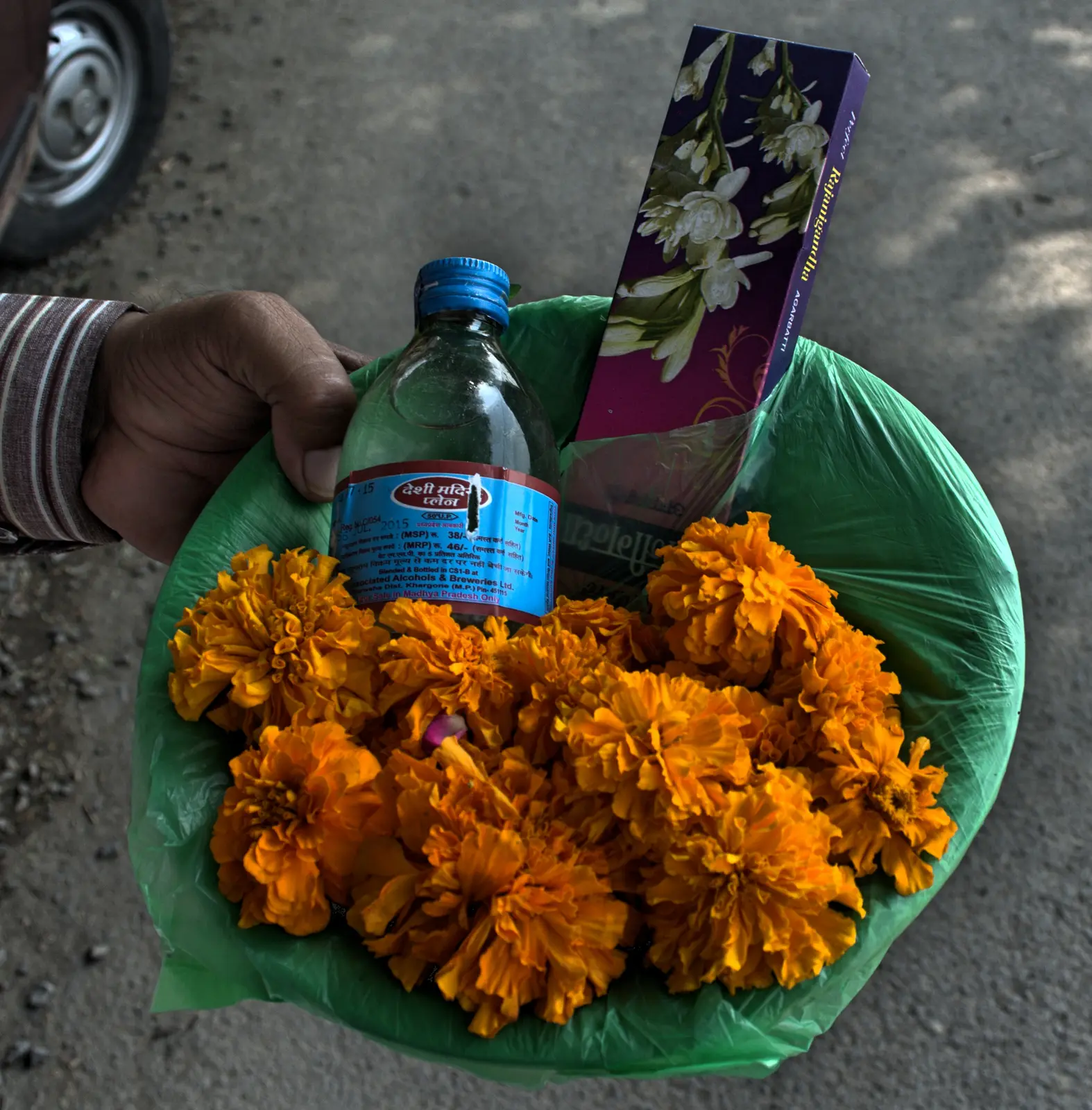
Kal Bhairav of Ujjain is known across India for the offering of liquor. The custom comes from Tantric worship, in which madya (wine) is one of the five ritual offerings called the panchamakara. Here only the liquor is actually offered, and the other four are observed symbolically. A devotee hands the bottle to the priest, who pours some into a shallow dish, recites prayers and holds the dish to the lips of the deity. The liquor is seen to drain away, and the remainder is returned as prasad. Priests say the deity is offered liquor five times a day as part of the regular worship. Since 1 April 2025 the sale of liquor has been banned within the municipal limits of Ujjain and the counters outside the temple have closed, but the ritual offering continues. Offering liquor is entirely optional. Flowers, coconut, incense and sweets are equally accepted.
Religious Significance
Kal Bhairav is revered as the guardian deity of Ujjain. Worship of the Ashta Bhairava, the eight Bhairavas, is an old part of the Shaiva tradition of the city, and Kal Bhairav is regarded as the foremost among them. The shrine was historically linked with the Kapalika and Aghora sects, for whom Ujjain was an important centre, and it remains a place of Tantric as well as everyday household devotion. People come here to seek protection from fear, relief from obstacles and courage in difficult times. According to temple officials quoted in 2026, some forty to forty-five thousand people visit on an ordinary day, and far more on weekends and festivals. For most pilgrims the temple is an essential stop on the Ujjain circuit, visited along with Mahakaleshwar, Harsiddhi and Mangalnath.
The Sawari of Kal Bhairav
Twice a year Kal Bhairav leaves his temple to tour his domain. The sawari is taken out on Dol Gyaras in the month of Bhadrapada and again on the day after Bhairav Ashtami in the month of Margashirsha (Aghan). In the late afternoon the district Collector and the Superintendent of Police worship the silver face of the deity, which is seated in a palanquin and dressed in a turban sent for the occasion by the Scindia family of Gwalior. An armed police contingent presents a guard of honour at the gate. The procession, with bands, horses, drums and tableaux, moves to the Bhairavgarh Central Jail, where the deity is worshipped and the prisoners have darshan. It then goes on to Siddhavat on the Shipra, where worship is offered, and returns to the temple in the evening.
At a glance
- Deity
- Kal Bhairav, a fierce form of Shiva
- Revered as
- Kotwal (guardian) of Ujjain and Senapati of Mahakal
- Tradition
- Shaiva and Tantric; foremost of the Ashta Bhairava
- Known for
- Liquor (madira) offered to the deity as bhog
- Scriptural mention
- Avanti Khanda of the Skanda Purana
- Era
- Ancient site with Paramara-period (9th–13th century) remains; present structure Maratha, 18th century
- Location
- Bhairavgarh, on the Shipra, about 6 km north of Mahakaleshwar
- Main festival
- Bhairav Ashtami (Kal Bhairav Jayanti)